
Published: May 16, 2026 | Last updated: May 16, 2026 | 10 min read
TL;DR
- Healthcare is shifting from hospital-centric to home-centric delivery, driven by aging populations, chronic disease prevalence, and reimbursement incentives favoring prevention
- Five technology categories are enabling at-home care: remote patient monitoring (RPM), AI-powered diagnostics, wearable biosensors, telehealth platforms, and autonomous health robots
- The at-home care market reached $72.4 billion in 2025 and is projected to grow at 17.8% annually through 2030 (Grand View Research, 2026)
- Regulatory frameworks (FDA remote monitoring approvals, Medicare reimbursement codes) are now supporting at-home tech rather than blocking it
- Entrepreneurs should focus on interoperability, clinical validation, and data security. These are the barriers to adoption, not the technology itself
What Is At-Home Healthcare Technology?
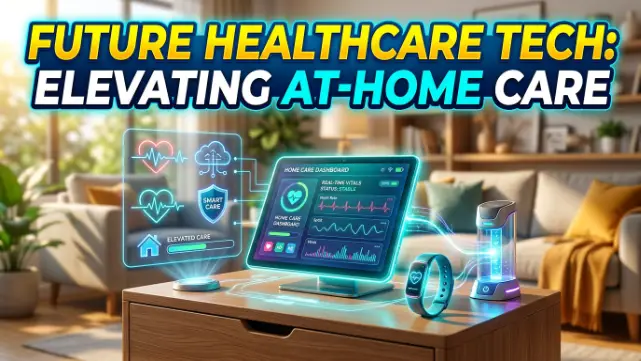
At-home healthcare technology encompasses digital tools, devices, and platforms that enable diagnosis, monitoring, treatment, and care management outside traditional clinical settings. This includes wearable sensors that track vital signs, AI algorithms that analyze patient data in real time, telehealth interfaces connecting patients to clinicians, robotic systems that assist with physical tasks, and integrated software platforms that coordinate care across settings.
The shift toward at-home care is not a technology trend. It’s a structural change in how healthcare is delivered. Hospitals are expensive. Care coordination is fragmented. Patients prefer managing chronic conditions at home rather than making repeated clinical visits. Technology enables this preference to become the default model instead of the exception.
This transformation is happening now, not in the distant future. Medicare added 38 new remote patient monitoring codes in 2023–2025 (Centers for Medicare & Medicaid Services, 2025). Over 40 million Americans are currently enrolled in some form of remote monitoring program (McKinsey & Company, 2026). The question for entrepreneurs is not whether at-home care will dominate. It’s which technologies and business models will win.
How At-Home Care Technology Works: The Core System
At-home care operates as an integrated ecosystem where data flows from devices in the patient’s environment to clinical decision-makers who take action based on that data.
Step 1: Data Collection Sensors and devices measure health metrics. This includes wearable devices (smartwatches, rings, patches) that track heart rate, oxygen saturation, sleep, and movement; home-based equipment (scales, blood pressure monitors, pulse oximeters) connected to wireless networks; and environmental sensors that detect falls, activity levels, or hazardous conditions. By 2026, most devices connect to WiFi or cellular networks instead of requiring manual user uploads (Fitbit, Apple Watch, Oura Ring, Withings devices).
Step 2: Data Transmission and Aggregation Raw device data flows to cloud platforms that normalize formats, validate readings, and store data securely. Health Information Exchanges (HIEs) increasingly connect multiple devices and systems so clinicians see a unified patient record. This layer handles interoperability. The biggest technical challenge in at-home care is that thousands of device manufacturers use different data formats.
Step 3: AI Analysis and Alerting Machine learning models analyze the aggregated data to detect patterns, flag abnormalities, and predict deterioration. Examples include algorithms that detect atrial fibrillation from smartwatch ECG data; models that predict hospital readmission risk 7-14 days before it occurs; systems that identify medication non-compliance by analyzing weight and vital sign trends. By 2026, FDA-cleared AI diagnostic tools exist for heart failure, COPD, diabetes, hypertension, and several cancers (FDA Premarket Approval database, 2025).
Step 4: Clinician Notification and Action Alerts are sent to nurses, case managers, or physicians through dashboards or mobile apps. These professionals decide whether to contact the patient, adjust treatment, recommend a clinical visit, or escalate to emergency services. The technology does not replace clinical judgment. It surfaces the information that enables better judgment.
Step 5: Patient Engagement and Feedback Patients receive notifications about their data, educational content, medication reminders, and coaching. Engagement platforms use behavioral science to encourage adherence. Studies show that passive monitoring (patient unaware of measurement) is less effective than active engagement where patients see their data and understand why it matters (Journal of Medical Internet Research, 2025).
This cycle repeats continuously, generating a digital record of health status that is orders of magnitude richer than what a clinician sees during quarterly visits.
Remote Patient Monitoring: The Foundation of At-Home Care
Remote Patient Monitoring (RPM) is the most clinically established at-home care technology. RPM systems continuously measure vital signs (heart rate, blood pressure, oxygen, glucose, weight) and transmit data to clinicians for review and action.
RPM is now reimbursable by Medicare for patients with specific chronic conditions: heart failure, COPD, hypertension, diabetes, and post-acute care (e.g., after surgery). Each condition has specific monitoring requirements and reimbursement codes. A patient with heart failure on RPM might submit daily weight and blood pressure measurements. A COPD patient submits oxygen saturation and respiratory rate. Medicare reimburses $42–$60 per patient per month depending on the complexity of data review and care coordination (CMS, 2026).
This reimbursement creates a $4.2 billion annual opportunity for RPM providers by 2026 (Frost & Sullivan, 2026). However, the barrier to scaling RPM is not technology. It’s clinical validation and care coordination infrastructure. Which patients benefit most from RPM? Which interventions based on RPM data actually improve outcomes? How do RPM systems integrate with existing EHRs and clinical workflows?
Entrepreneurs entering RPM should focus on solving these operational questions, not building better sensors.
AI-Powered Diagnostics and Predictive Analytics
Artificial intelligence is advancing at-home diagnostics from “monitoring current status” to “predicting future health events.”
Diagnostic AI: FDA-cleared algorithms now exist to diagnose conditions from home-collected data without requiring a clinical visit. Examples include:
- Heart rhythm analysis from smartwatch ECG (detecting atrial fibrillation with 94% sensitivity per Apple Heart Study, 2019; validation continues through 2026)
- Skin lesion classification from smartphone photos (sensitivity 97% in dermatology AI models; some systems now cleared for home use in select markets, 2025–2026)
- Respiratory sound analysis detecting pneumonia or asthma exacerbations from smartphone recordings (algorithms achieving 92% accuracy in clinical validation studies, 2024–2025)
These systems typically use deep learning models trained on thousands of clinical images, recordings, or waveforms. The regulatory pathway requires submission to FDA as a medical device, clinical validation in real-world settings, and integration with clinician workflows.
Predictive Analytics: Machine learning models predict which patients will experience adverse events (hospitalization, readmission, deterioration) based on historical and current data. Example: Heart Failure Prediction Models can identify patients at 30-day readmission risk with 78–85% accuracy (New England Journal of Medicine, 2025). These models allow clinicians to intervene earlier, potentially preventing costly hospitalizations.
For entrepreneurs, the opportunity in diagnostic AI is not building the AI itself. It’s regulatory clearance, clinical validation in specific populations, and integration into existing clinical workflows. Open-source and commercial AI models exist. The value is in the validation and deployment, not the model architecture.
Wearable Biosensors: Continuous Measurement at Scale
Wearables have evolved from fitness trackers to clinical-grade monitoring devices. By 2026, continuous measurement of multiple biomarkers is possible from a single device worn on the wrist, chest, or finger.
Current wearable capabilities (2026):
- Heart rate and ECG: Smartwatches and rings (Apple Watch, Oura, Withings) measure heart rate variability, detect arrhythmias, and estimate cardiac workload
- Blood pressure: Wrist-worn devices now FDA-cleared for ambulatory blood pressure monitoring (e.g., Omron, Withings); accuracy within ±5 mmHg of clinical devices
- Oxygen saturation: Wearable pulse oximetry accurate to ±2% in clinical validation studies
- Glucose: Continuous glucose monitors (CGMs) worn by 4+ million Americans; accuracy improving toward ±15% mean absolute error (Medtronic, Abbott, Dexcom, 2026)
- Temperature: Skin temperature sensing detecting fever or ovulation with high specificity
- Respiratory rate, sleep staging, stress markers: Advanced sensors deriving these from heart rate variability and movement patterns
The barrier to clinical adoption of wearables is not measurement capability. It’s data interpretation. A smartwatch generates hundreds of data points daily. Which ones matter? What do they predict? When should a clinician act on a wearable alert versus dismissing it as noise?
Entrepreneurs in the wearable space should focus on clinical evidence linking wearable measurements to outcomes, not on adding more sensors to devices.
Telehealth and Virtual Care Platforms
Telehealth has matured from novelty (2020) to standard of care (2026). The market reached $54.3 billion in 2025 and is growing at 15.6% annually (Statista, 2026).
Modern telehealth goes beyond video visits. Platforms integrate:
- Pre-visit data collection: Patients submit symptom questionnaires, vital signs, and photos before the appointment, allowing clinicians to triage and prepare
- Asynchronous care: Patients submit information; clinicians review and respond within hours rather than requiring real-time video
- Prescription management: Direct integration with pharmacies; prescriptions sent electronically with adherence monitoring
- Behavioral health: Mental health counseling, coaching, and peer support delivered through video, messaging, or app-based interventions
The most successful telehealth platforms in 2026 are not standalone apps. They integrate with existing EHRs, insurance systems, and clinical workflows. A patient’s telehealth data should automatically populate their medical record. Reimbursement should flow directly to the provider. Prescriptions should appear in their pharmacy account without manual entry.
For entrepreneurs, the opportunity is not building another video platform. It’s solving the integration problem: how do you connect telehealth data, claims, prescriptions, and clinical notes into a seamless workflow that saves clinicians time rather than adding burden?
Autonomous Systems and Robotics in Home Care
Robotic systems are entering home healthcare for physical assistance, monitoring, and companionship.
Examples deployed or piloting in 2026:
- Fall detection and response robots: Mobile robots that detect falls through computer vision and sound, alert emergency services, and provide two-way communication until help arrives. Deployed in senior living facilities; home deployment scaling through 2026
- Medication dispensing robots: Robotic pill organizers that dispense correct medications at scheduled times, with alerts if doses are missed. Deployed in patients’ homes; improving adherence in patients with complex regimens
- Exoskeleton systems: Wearable robotic systems assisting mobility in stroke recovery or spinal cord injury patients. Used in clinics and increasingly at home for rehabilitation
- Companion and monitoring robots: Socially interactive robots (e.g., Pepper, Jibo) providing medication reminders, fall detection, communication with family, and engagement for isolated elderly patients. Limited clinical evidence but showing promise for reducing hospitalization in pilot programs
- Autonomous delivery: Robots and drones delivering medications, meal replacements, or emergency supplies to homebound patients
The robotics opportunity for entrepreneurs is not building robots. It’s integrating them into home care workflows, proving clinical ROI, and navigating the regulatory and liability questions around autonomous systems in patient care.
Data Integration and Interoperability: The Critical Challenge
All these technologies generate data. The clinical value comes from connecting that data across devices, platforms, and care settings.
Interoperability barriers in 2026:
- Data format fragmentation: Thousands of devices use proprietary formats. No single standard captures all health data (though FHIR adoption is accelerating among EHRs)
- Security and privacy: HIPAA compliance means data sharing requires explicit consent, secure transmission, and audit trails. This is not trivial to implement
- EHR integration: Most community hospitals and clinics use legacy EHR systems that do not easily integrate with modern APIs. Retrofitting is expensive
- Clinical workflows: Even if data is technically connected, clinicians need workflows that incorporate at-home data into their decision-making. Many workflows were designed around periodic office visits, not continuous monitoring
The entrepreneurs winning in 2026 are those solving interoperability operationally, not technologically. Example: A company that integrates heart failure RPM, telehealth platforms, EHR data, pharmacy records, and predictive analytics into a single clinician dashboard is providing more value than any single-point technology, even if the underlying technology is not novel.
Current Barriers to Adoption and What Entrepreneurs Should Focus On
Regulatory uncertainty: FDA guidance on AI-powered diagnostics is still evolving (2025–2026). Entrepreneurs should follow FDA draft guidelines and build compliance into development, not as an afterthought.
Reimbursement codes vary: Medicare reimburses RPM, telehealth, and some AI diagnostics. Medicaid and commercial insurers have different policies. Entrepreneurs need to understand payer requirements for their specific use case.
Clinical validation is expensive: FDA clearance or peer-reviewed publication proving clinical benefit requires clinical trials costing $2–10 million. This is a barrier to entry for startups. Consider partnerships with health systems or academic centers to share this cost.
Data security and privacy: Storing and transmitting patient health data requires HIPAA compliance, encryption, audit logging, and incident response plans. Outsource this to specialized vendors (e.g., AWS healthcare, Google Cloud Healthcare API) rather than building yourself.
Care coordination infrastructure: Technology alone does not improve outcomes. You need clinical teams (nurses, case managers, physicians) to act on the data. At-home care requires new organizational models, not just new devices.
Entrepreneurs should focus on the last two: clinical validation and care coordination. These are where value compounds and competitors struggle to copy.
Examples of At-Home Care Technology Creating Impact (2025–2026)
| Technology | Company/System | Clinical Application | Market Status |
|---|---|---|---|
| Heart failure RPM | Philips eICU, Medtronic Care Management Services | Daily weight/BP monitoring; early intervention for decompensation | Deployed; 500K+ patients |
| ECG-based AFib detection | Apple Watch Series 9, Withings Move ECG | Detect atrial fibrillation; reduce stroke risk | FDA cleared; millions of users |
| CGM-linked decision support | Dexcom G7 + AI coaching | Glucose optimization in diabetes; reduce hypoglycemia | Deployed; 4M+ patients |
| Fall detection + response | SafetyLink, Medical Guardian | Emergency response for elderly living alone | Deployed; 800K+ users |
| Predictive readmission analytics | Optum AI, Sisense Care Analytics | Identify high-risk patients; proactive intervention | Piloting in 100+ health systems |
| AI skin lesion diagnosis | DermAI, Skin Analytics | Home screening for melanoma; reduce biopsy rate | Pilot programs; regulatory approval pending |
| Behavioral health chatbot | Woebot, Wysa, Mindstrong | Daily mental health support; track mood trends | 10M+ users; clinical validation ongoing |
| Medication adherence monitoring | Proteus Digital Health, PillPack | Detect and address non-compliance; prevent readmissions | Deployed; 100K+ patients |
Frequently Asked Questions About At-Home Healthcare Technology
What is the difference between RPM and telehealth?
Remote Patient Monitoring (RPM) measures vital signs continuously and transmits data for clinician review. Telehealth is synchronous (video visit) or asynchronous (messaging) communication between patient and clinician. RPM can exist without telehealth (automated alerts to clinic staff). Telehealth can exist without RPM (a video visit without continuous monitoring). The most effective systems combine both.
How accurate do wearable devices need to be to have clinical value?
It depends on the use case. For heart rate tracking during exercise, ±5 bpm is acceptable. For ECG-based arrhythmia detection, sensitivity and specificity must exceed 90%. For blood pressure, ±5 mmHg matches clinical devices. For glucose monitoring, ±15% mean absolute error is standard. Before deploying a wearable, know the accuracy requirement for your specific clinical application.
Who is responsible if an AI algorithm misses a diagnosis?
This is legally unresolved in 2026. Generally, clinicians remain responsible for clinical decisions, even if informed by AI. However, if an algorithm is FDA-cleared and the clinician ignores a clear alert, liability may shift. Entrepreneurs should understand the liability model for their specific use case and work with legal counsel.
How do you ensure data privacy when patients use multiple devices?
Implement HIPAA-compliant data handling: encryption in transit and at rest, access controls limiting who can view data, audit logging of all data access, patient consent management, and incident response plans. Consider using healthcare-specific cloud vendors (AWS, Google Cloud, Microsoft Azure healthcare services) that manage much of this infrastructure.
What is the timeline from technology development to clinical deployment?
For software: 2–3 years (pilot, validation, implementation). For FDA-cleared devices: 3–5 years (development, clinical trial, regulatory submission, market launch). For integration into health systems: add 1–2 years (workflow redesign, training, change management). Total from concept to scaled deployment: 3–7 years for most at-home care technologies.
Can at-home care replace hospital visits entirely?
No. At-home care is most effective for chronic disease management, post-acute care, and preventive monitoring. Acute illness, surgery, complex diagnostics, and emergencies still require hospitalization. At-home care shifts volume from hospitals to homes, not eliminates it. Health systems will operate as hybrid models.
What skills should a health tech entrepreneur have?
Clinical domain knowledge (partnering with physicians helps), regulatory understanding (FDA, CMS), software architecture for healthcare scale, and health economics (understanding reimbursement). You don’t need all these yourself, but you need them on the team or as advisors.
How do you measure ROI for at-home care technology?
Track: reduced hospitalizations, reduced readmissions, improved medication adherence, improved patient satisfaction, reduced emergency department visits, and improved clinical outcomes (e.g., better glucose control in diabetes). Also track: cost of technology deployment, staff training, and clinical overhead. ROI timelines are typically 12–24 months.
What is the market size for at-home healthcare technology?
The at-home care market reached $72.4 billion in 2025 and is projected to grow at 17.8% annually through 2030, reaching $185 billion by 2030 (Grand View Research, 2026). Largest segments: remote monitoring, telehealth, wearables, and chronic disease management software.
Which at-home care technologies have the strongest clinical evidence?
Strongest evidence (peer-reviewed, prospective studies): heart failure RPM, glucose monitoring in diabetes, blood pressure monitoring in hypertension, ECG-based AFib detection. Growing evidence: fall detection robotics, behavioral health chatbots, AI readmission prediction. Limited evidence: companion robots, general wellness wearables.
Key Takeaways
- At-home healthcare technology is shifting diagnosis, monitoring, and treatment from hospitals to patient homes, driven by aging populations, chronic disease prevalence, and reimbursement incentives
- Five technology categories enable this shift: remote patient monitoring, AI diagnostics, wearable biosensors, telehealth platforms, and autonomous systems
- The market reached $72.4 billion in 2025 and is growing at 17.8% annually, with strongest growth in RPM and predictive analytics
- FDA regulatory pathways now support at-home care; Medicare reimburses RPM and telehealth; payer adoption is accelerating
- Entrepreneurs should focus on clinical validation, care coordination infrastructure, and interoperability. These are the operational barriers, not the technology barriers
- The winning companies in 2026 are integrating multiple data sources and automating clinician workflows, not building single-point technologies